

Wow! Having gone into a rain delay down a set in Sunday’s Washington final against Jessica Pegula, Alex Eala looked like she was down and out. But today, she pulled it back in the second set, then bagelled Pegula in the third to take her first WTA trophy. The people she beat on her way to the final was remarkable too: Qinwen Zheng, Leylah Fernandez, Elina Svitolina and Naomi Osaka were all caught in the crossfire.
As is characteristic of an Eala match, she played in front of passionately vocal local Filipino fans in DC and proudly dedicated the win to her global supporters with a heartfelt "Salamat, Mabuhay!"
In the new issue of BAGEL, Craig Shapiro charted the rise of '“Ealamania” and Eala’s fellow Filipina, Rebekah Reyes, chatted to her about life on tour. The English-Tagalog-Taglish conversation covered her on-court style, her favourite Filipino dishes and why she thinks tennis needs to be more rowdy (get your hands on Issue 4 for the full thing). Most interestingly of all, she explains the reason behind one of her biggest match-winning weapons: her ability to take the ball spectacularly early…
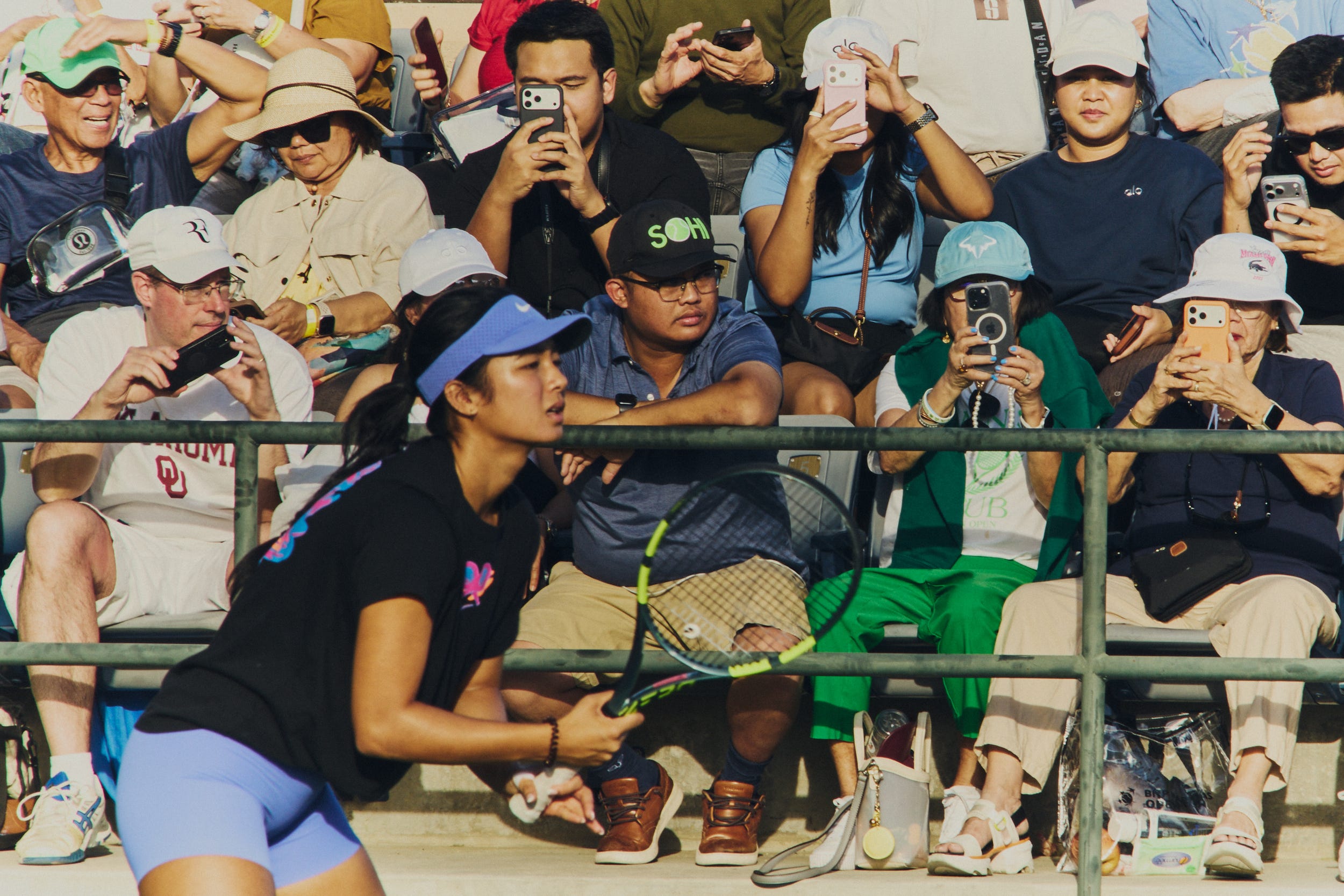
REBEKAH REYES: What are your earliest memories of watching tennis?
ALEX EALA: Growing up, I watched a lot of Rafa, obviously. The big three, so Rafa, Roger, Novak, and on the women’s side, I watched a lot of Maria Sharapova.
People back home call you now the new Manny Pacquiao of Filipino sport. How do you feel hearing that?
Oh my god. Ang layo ko pa. Ang layo-layo ko pa (I’m so far, I’m so, so far). I think iba dapat (I think it should be someone else). I don’t think anyone will replace him. No one will ever replace what Manny is to the country. At the same time, I think it benefits both if I’m someone else, because then I’m able to make my own path. Although being compared to Manny is like, “Wow!” It is the highest honour in the Filipino sports world.
It really is. We’re just so excited to see someone like you do so well, and inspiring a lot of people. Growing up, what other sports or athletes did you and your family gravitate towards?
Alam mo, mahina ako sa other sports (You know, I’m really weak at any other sport). Wala talaga iba (There’s really nothing else). Tennis is my life. I’m telling you, I literally had no life outside of tennis and school. Iyan lang talaga, yeah (That’s really it, yeah). But, yeah, tennis is life. Pacquiao is life!
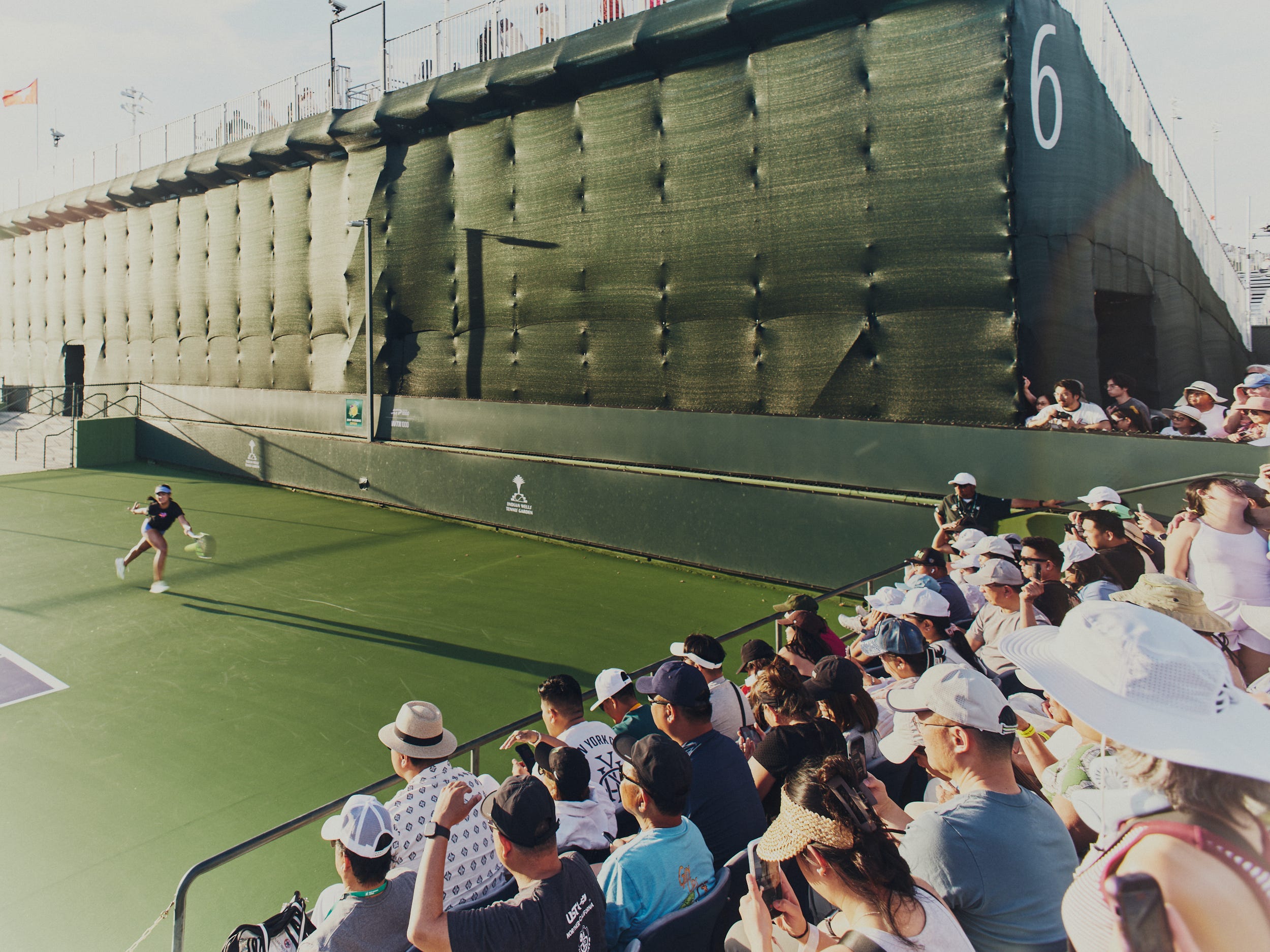
I don’t think many people around the world have fully grasped how challenging it actually is to play back in the Philippines. You mentioned in a podcast how some courts are shared with the basketball court, and based on experience, there are even moments where lines are just drawn using chalk on a shell court. Can you describe what that feels like? Has that shaped you as a player, do you think?
It’s difficult to describe. Lalo na sa mga... sa mga taong taga-Grand Slam countries, diba? (Especially to people who are from Grand Slam countries, right?) Siyempre, their facilities are so developed already, and their public courts are great. Sa atin nga, wala tayong public courts (For us, we don’t even have many public courts). One, we don’t have public courts, and two, the private courts, or the courts in the country clubs, are in really bad condition, especially for what you pay to get into them. First, the quantity is not a lot, and the quality is also bad, so wala na nga ang quantity, wala pa ang quality! (We don’t have the quantity, and more so the quality!) So I think it’s a beautiful thing now that I’ve seen tennis have this first big wave.
It really is booming.
Everybody is really loving tennis, and I love seeing it because it’s kind of like the two worlds colliding. My home and what I love to do is my passion. And now it’s booming in the Philippines, which can only lead to greatness.
How do you think coming from the Philippines shaped you and your game style?
There are definitely things fundamentally in my game that come from training back home. I trained on a tennis court on a basketball court, so there were hoops behind me, so hindi ako nakaka-atras (I’m not able to move back). So for a lot of my youth, I was a very aggressive player. I never really stepped back because if I went back too much, I’d hit the hoops. So it’s small things like that.
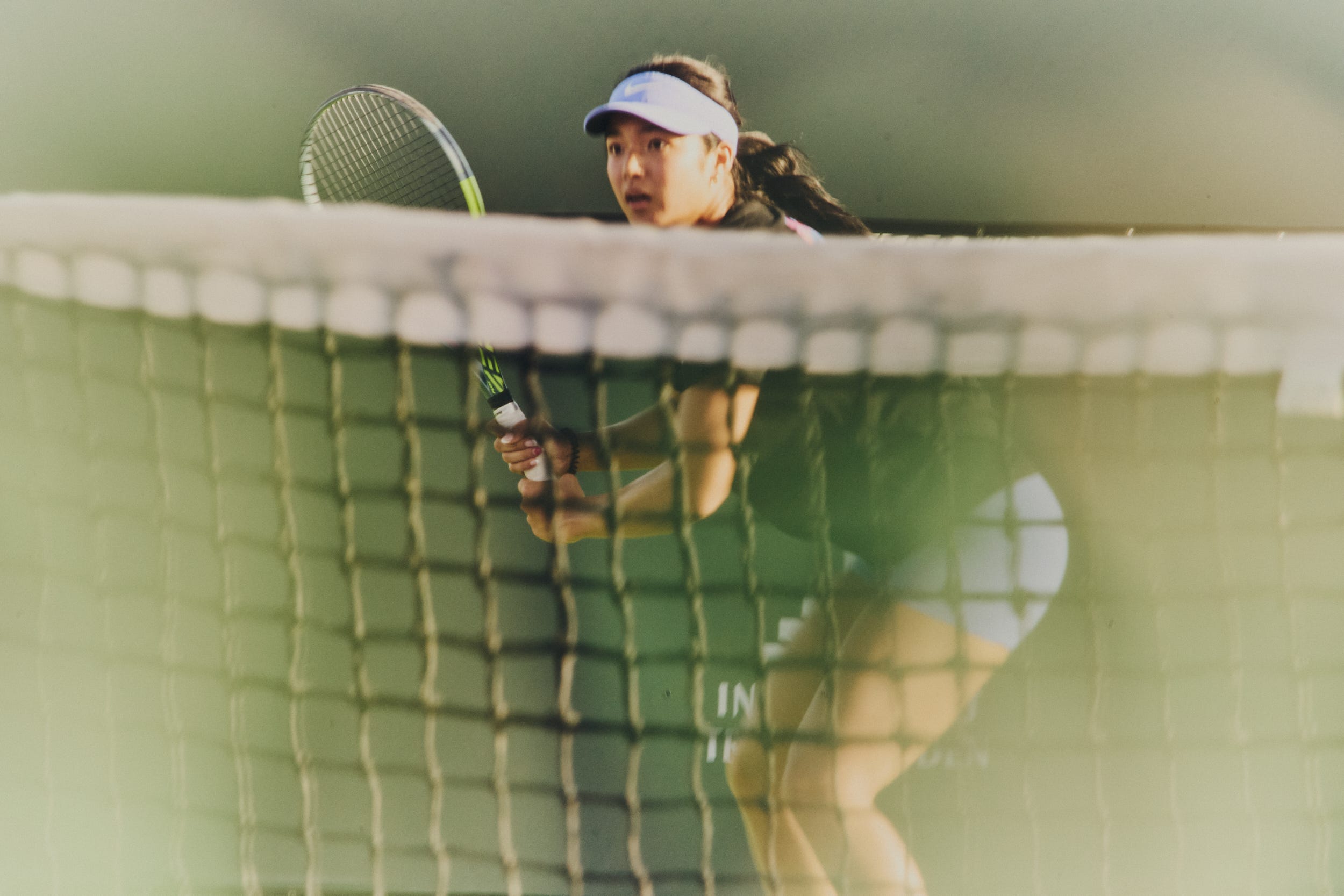
I love that. When you went to the Nadal Academy early, do you think you had to grow up quickly?
Yes, I think in general, tennis players have had to — or professional athletes — we have to mature very early. And of course, each case is different, right? But I’ve kind of taken charge of my life very early, and I’ve always had that. Sport has given me the blessing of discipline and yung kayod (the grind) — na kaya kong kumayod (that I know how to grind) — to build my career, to go for what I want, and to chase my dreams.
That’s one of my favourite Filipino words you know, kayod (grind). There’s been talk everywhere about the new wave of tennis fans, with players like Ignacio Buse, João Fonseca, and all of that new energy coming in. But then some of the backlash too, especially around certain loud fandoms. What are your thoughts on all of it?
I think it’s an amazing thing for the sport that there’s a lot of the next generation, or the new generation, introducing different demographics to the sport, so I think that can only do good things. We want to leave tennis better than we found it, so I think we’re all doing our part in that and we’re all contributing.
Back home, there’s a majority that love watching basketball, and I’m guessing with our fans, we love that rowdiness because we grew up loving to watch it. So I guess that could be in the culture as well, right? It’s just how passionate we are.
That’s a good point, but also it’s about how tennis is watched. I think it’s a misconception that you cannot get rowdy. I think it’s a big misconception, because there are certain times where it’s appropriate, or it’s a sign of respect towards the players.
Does having such a passionate fan base really help you when you’re down? Do you get actual energy and motivation from the crowd?
It does really help, yeah!


When you’re on tour, what’s your way of switching off?
I like to go to cafes. I love trying matcha. I’m a matcha girl. Kailangan oat milk (It has to be oat milk).
In a vlog with Zeynep, you mentioned that if you reach the third round of a Grand Slam, you’re going to buy yourself a Bottega bag. So is that still on your wish list, or do you have a new item on your list?
That is still on my wish list. That is still on my wish list, yes. So maybe this year. Yeah, maybe this year.
I’m rooting for you.
Oo! (Yes!)
I saw the collab with Nike on the Sampaguita. Can we look forward to any more collabs?
Wait and see! Come along on the journey, guys. We’ll see, maybe.
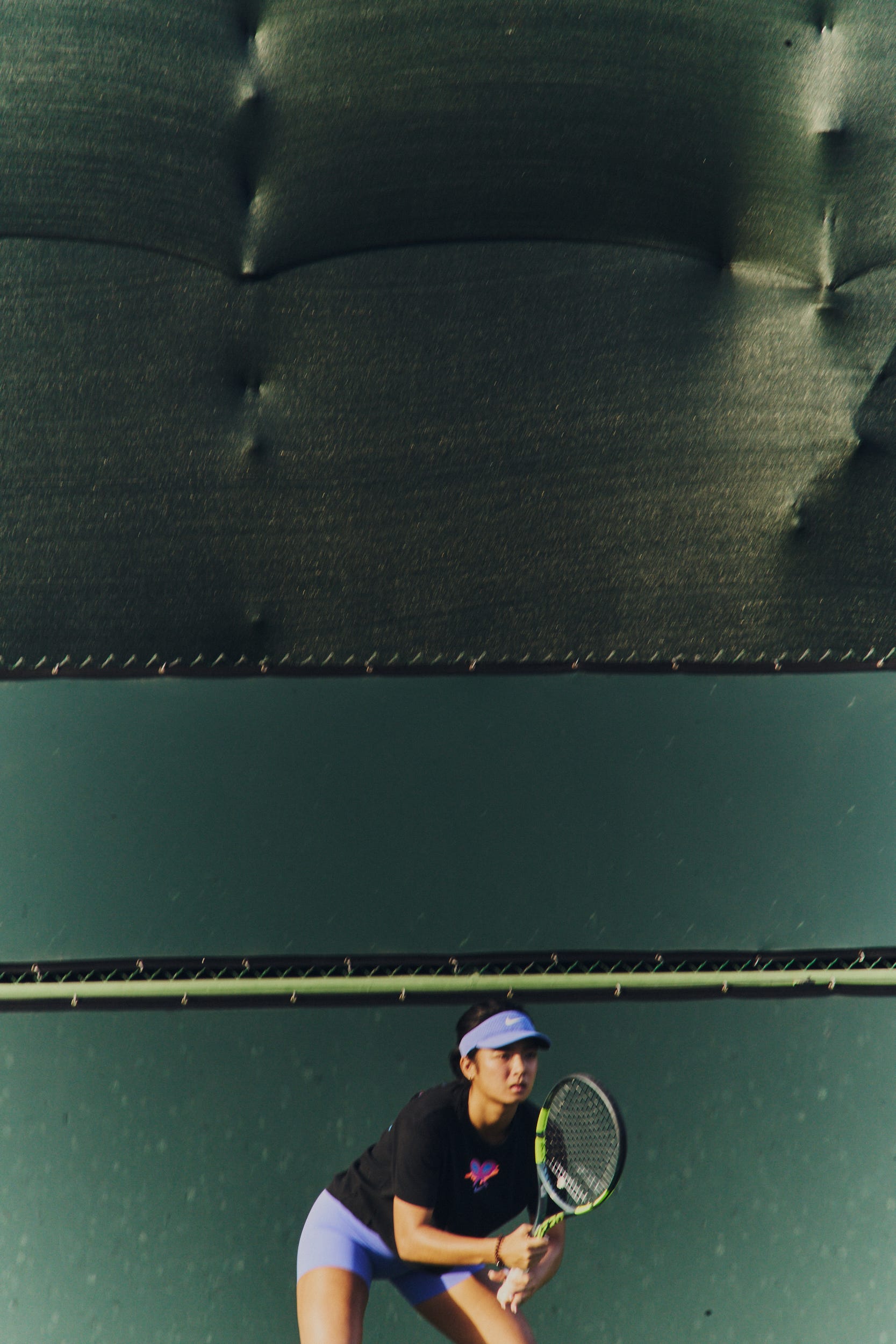
How do you decide what kit to wear? I’m sure they give you a bunch to choose from, right?
Yeah, I choose. Every couple of tournaments, they’ll send a collection with different looks, and then the players decide which one they go with. Then you just choose whatever you feel like in terms of colours. I just go based on what I want, really.
I love how the players now are being more expressive on court. They wear more jewellery and make-up. How do you express yourself?
I like jewellery. I think accessories are a great way to jazz yourself up on court. I change it up a bit, sometimes with hairstyles also [pointing to her bubble ponytail] Everyone does different things.
Where have you found the best Filipino food abroad, or when you’re craving Filipino food, where do you normally get it? Do you ask somebody — let’s say, your mom — to cook for you?
My dad cooks good Filipino food, yeah. And yeah, he does good inihaw.
Your dad! Really?
Yeah, and giniling!
Wow. Yeah, when my mom visits me in London, I make her cook me Nilaga, and people are like, “Wow, that’s... that’s an interesting choice — not sinigang?” I’m like, yeah, Nilaga.
Oh, yeah, Nilaga is great! So underrated!
Is there anything specific you miss back home?
Oh my god. I think there are things that are very unique, you know, that are very difficult to find here — like certain flavours, like mais con yelo. So good.
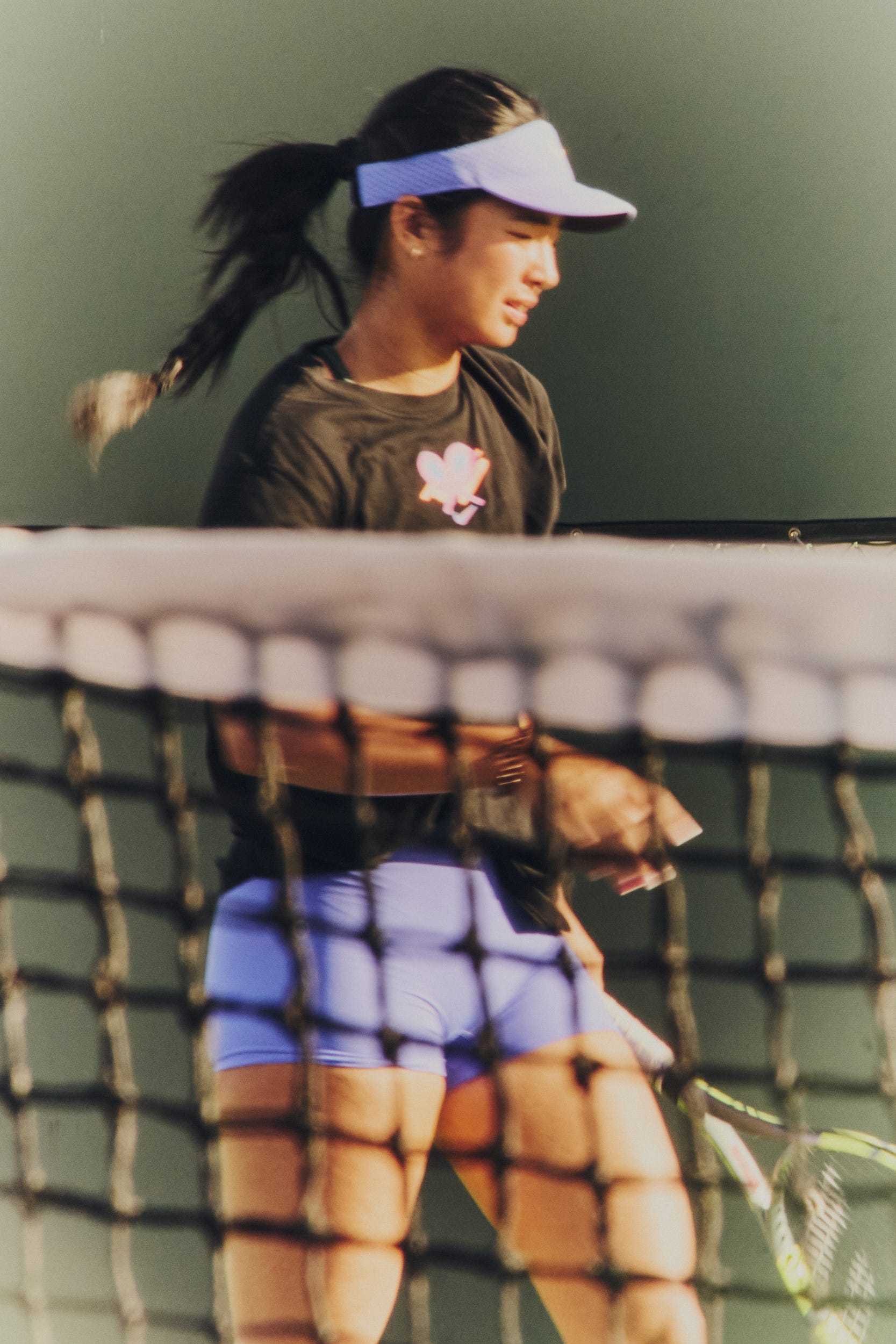
As an amateur player myself, who is also quite competitive, I have to ask on behalf of a lot of us — what’s one simple piece of advice you’d give us to keep playing, no matter how tough it gets?
Okay, wait, can I ask you — what’s something about tennis that frustrates you? Maybe that will make it easier for me.
So, an example would be, I always work so hard on my form, and then I try to compete at an amateur tournament - or even just on a random day - everything I trained for completely disappears... It can get so frustrating!
Girl! Dude, stop!
Poof, ganun lang! (Just like that!)
Story of my life! No, I think tennis is a slow burn. Good things take time, and tennis is something you really need to put the work into — you need to put the hours in. And, you know, there are weeks for me — obviously it’s different being professional — but there are weeks for me where I’ve won all my practice matches before, and then I go on court and just play so badly, and I lose. And there are weeks naman na (on the other hand, when) I lost all my practice matches badly, and then I go out and play amazing. So I think you just have to look at the average. Don’t dwell too much on one thing. Good things take time.
Good things take time. I love that. Galing! (So good!). Looking ahead over the next few years, what are the goals that matter most to you? Grand Slam, Top 10, Olympic medal?
Oh, so in terms of results — well, yeah, I would love to join the Olympics. And, of course, a deep run in a Slam. And, of course, if I get to win one — amazing. That’s the dream. That’s the ultimate goal.
WHERE TO TRAIN LIKE ALEX EALA
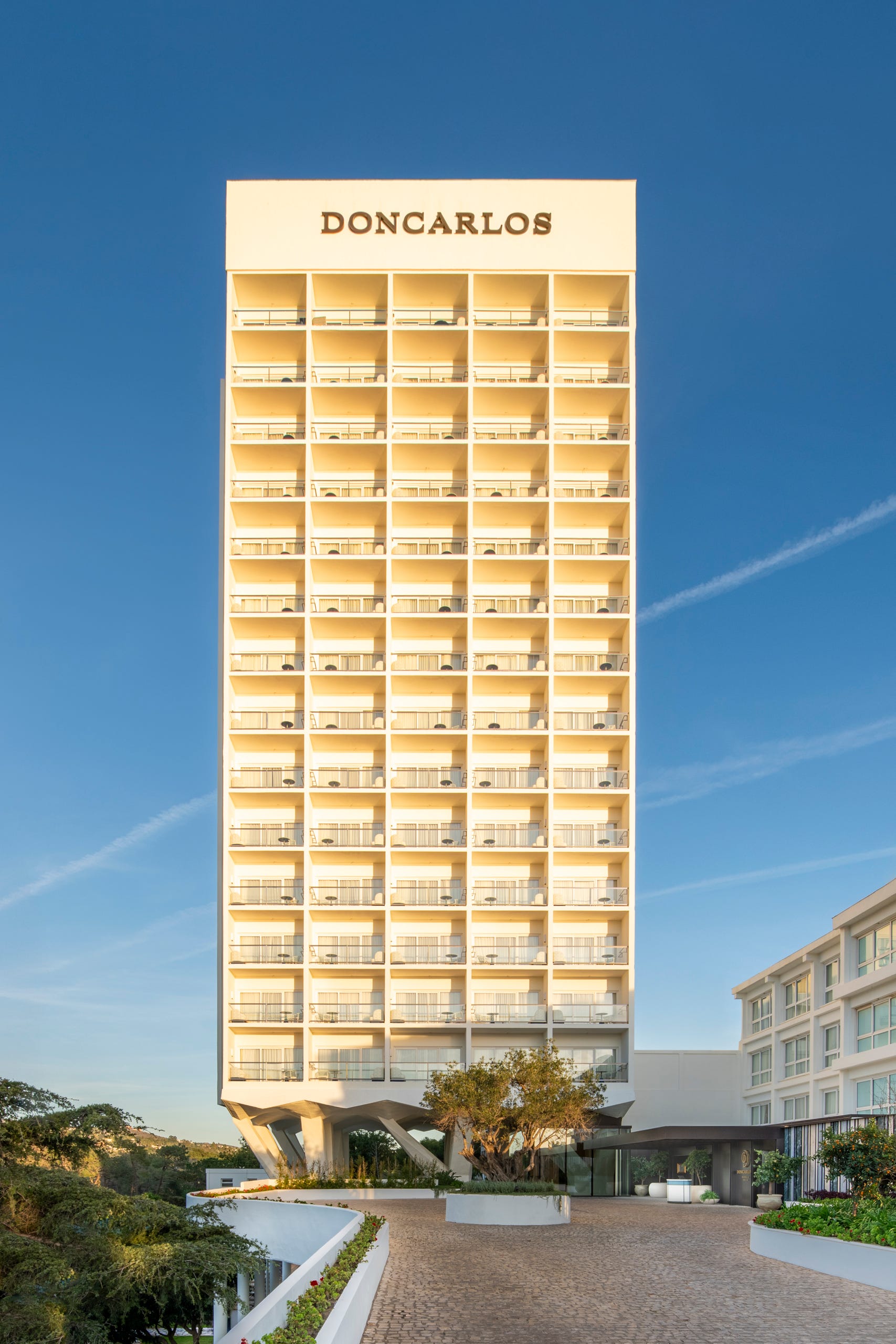
Alex Eala is one of the most famous graduates of the Rafa Nadal Academy (see cute pictures of her getting her diploma from Rafa and Iga Świątek — a photo that must have haunted Iga after Alex knocked the defending champion out of this year's Wimbledon). If you want to benefit from some of the magic of the methodology she learned there, head to the new Rafa Nadal Tennis Center at the Don Carlos resort, set among the Elviria coastal pine forests of Marbella.
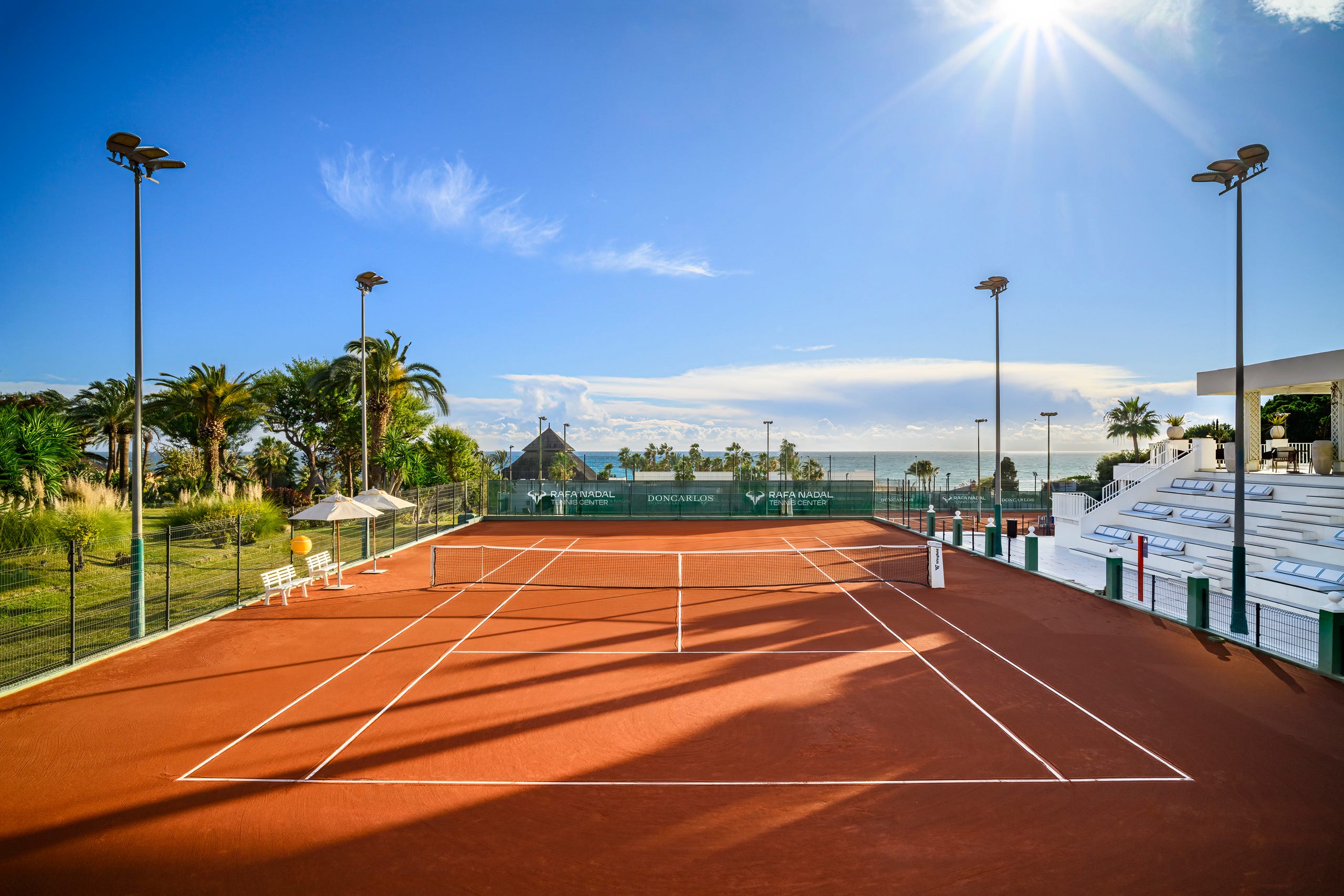
Unlike some sterile tennis resorts, this centre sits on the grounds of a chic 1960s beachside resort, which has just undergone a full refurbishment to restore the storied legacy of an iconic Modernist hotel that transformed the Costa del Sol. The Rafa Nadal Tennis Center is set in the 20,000-square-metre garden, a sprawling, exotic botanical ecosystem that runs directly down to the beach.
The seven clay courts are immaculate, with views over the Mediterranean. And the Break Point café and clubhouse are buzzing with hotel guests and locals, young and old, who also hang out chatting to pros, getting coffees and shakes, buying up the merch and hitting the gym.
You can do 1-day, 3-day and 6-day coaching plans, and all adult group training is capped at a 1:4 coach-to-player ratio. Individual sessions start at €99 for 50 minutes, with prices peaking at €2,070 for the comprehensive 6-day immersive experience — two hours of group tennis training, one hour of specialised physical conditioning and one therapeutic sports massage per day at the incredible on-site spa.
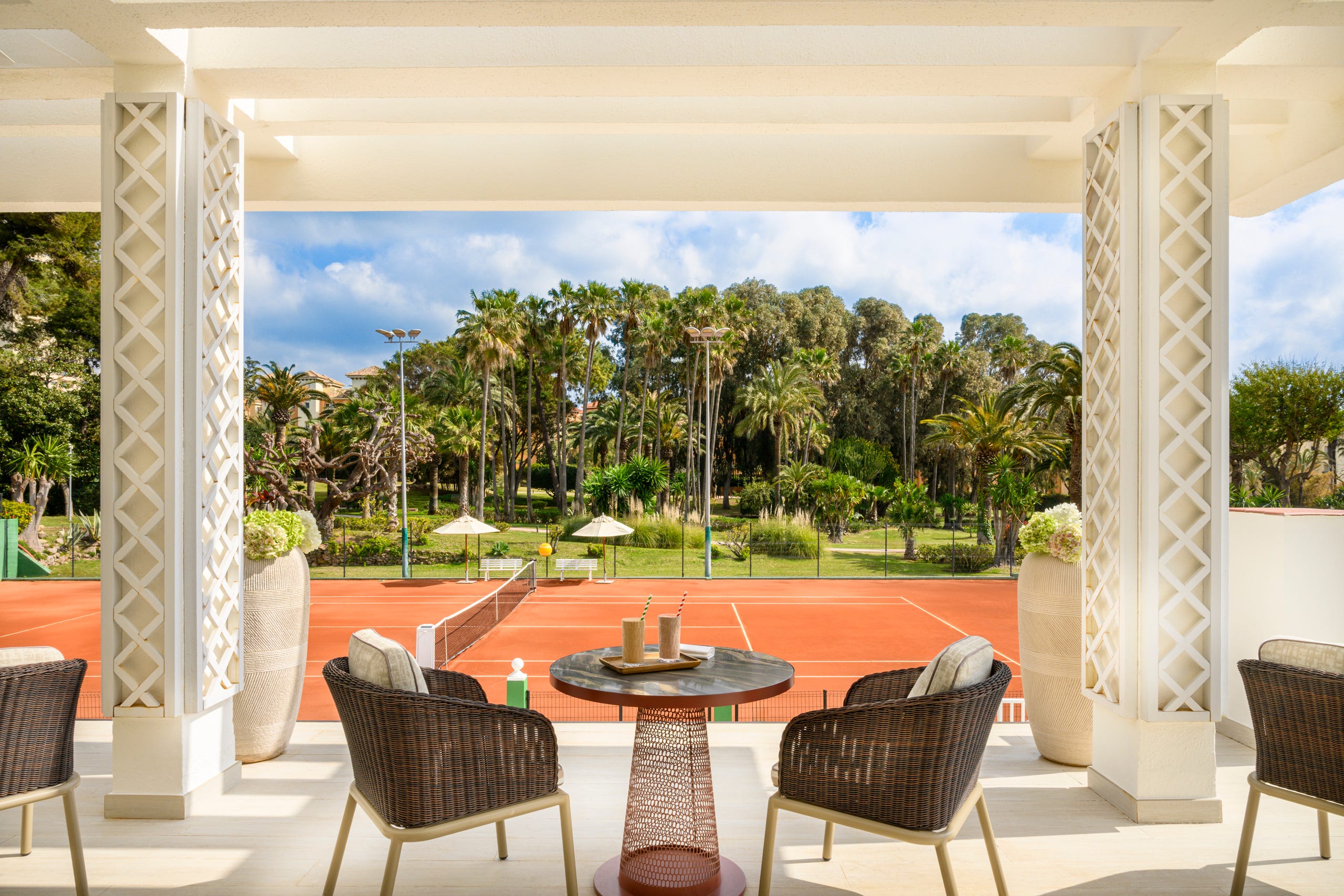
After just one group and two private sessions with the brilliant coach, Leandro Mattar, my shots felt sharper and, importantly, more modern (I’m desperately trying to shake off some residual 90s/00s technique). I learnt some really simple, effective rallying logic — if I’d done the full 6-day package with him, I’d have come back fully transformed. I was also lucky enough to be there for a clinic with Toni Nadal, who also brought things back to basics.
Toni sees too many amateurs trying to master advanced technical details they’ve spotted on Instagram (the usual unit turns, wrist lag, pronation), but really encouraged easy, fluid swing paths and a focus on simply getting the ball in court, and where you want it to land. Indeed, aren’t many of us ruining the joy of rallying and the tactical side of the game because we’re so fixated on hitting some straight-armed Roger-Carlos forehand? Guilty as charged!
This is one of the few academies I’ve visited where I would happily just head out alone for a few days if I didn’t have plans for the weekend. Fellow players there were really social (shout-out to 70-year-old Anne, who was fitting in the full-service 6-day package the week before her son’s wedding, and looking sharper by the day). And after the tennis, stroll straight for a swim in the Mediterranean (which the courts overlook) or chill by the joy-inducing poolside painted caves at Lucia Beach Club.
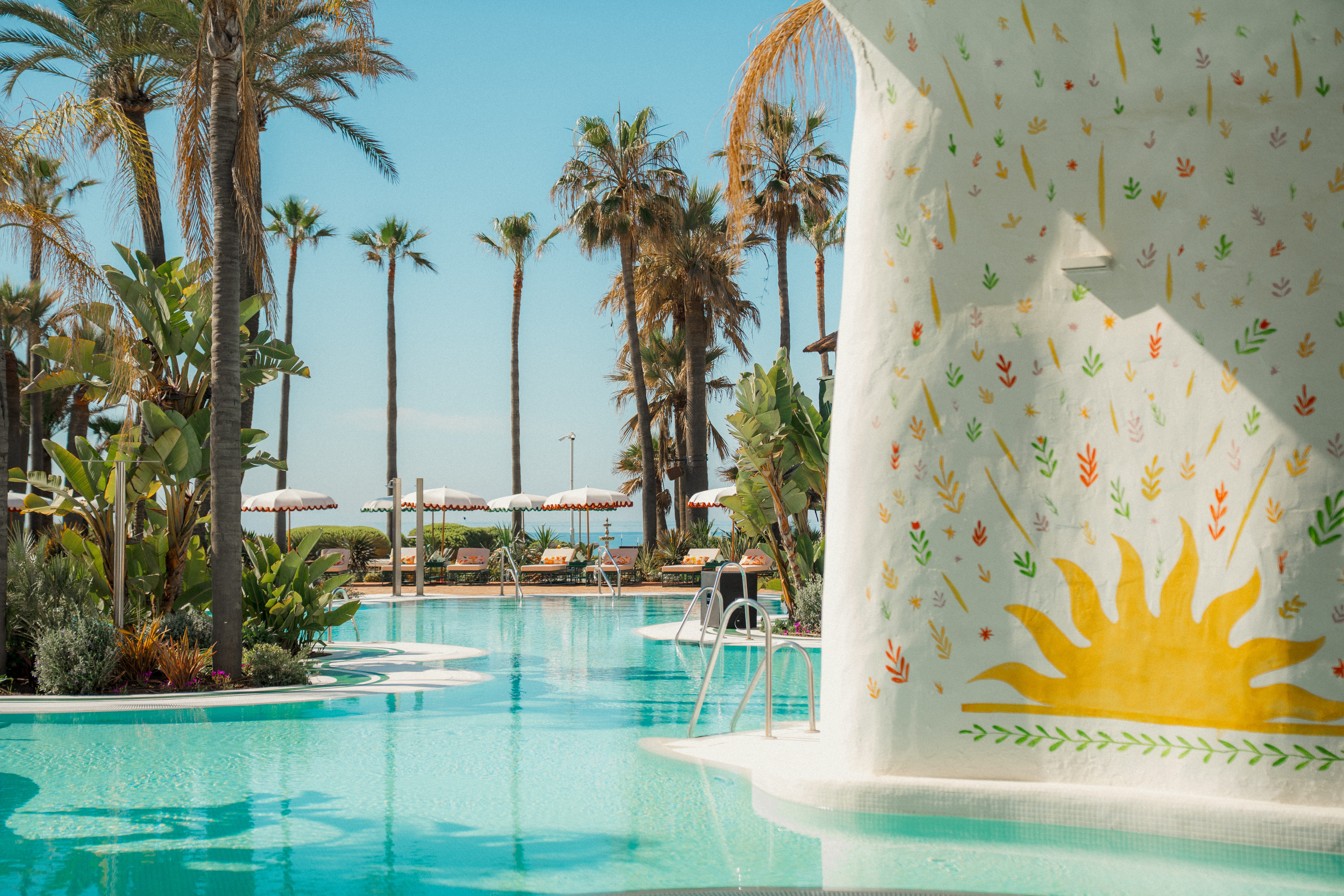
The hotel’s cafés, bars and restaurants mean you could easily stay on-site. By day, have lunch at Lucia or the other poolside spot, Sol y Sombra. And at night, the courtyard, terrace and interiors of Manero (a well-known Madrid restaurant with an outpost here) really turn up the volume on the old glamour associated with this iconic hotel.
Stuart Brumfitt
Huge fan of Eala!
Hola , Excelente Entrevista. Un Saludo.